
Oak Timber Framing
Works
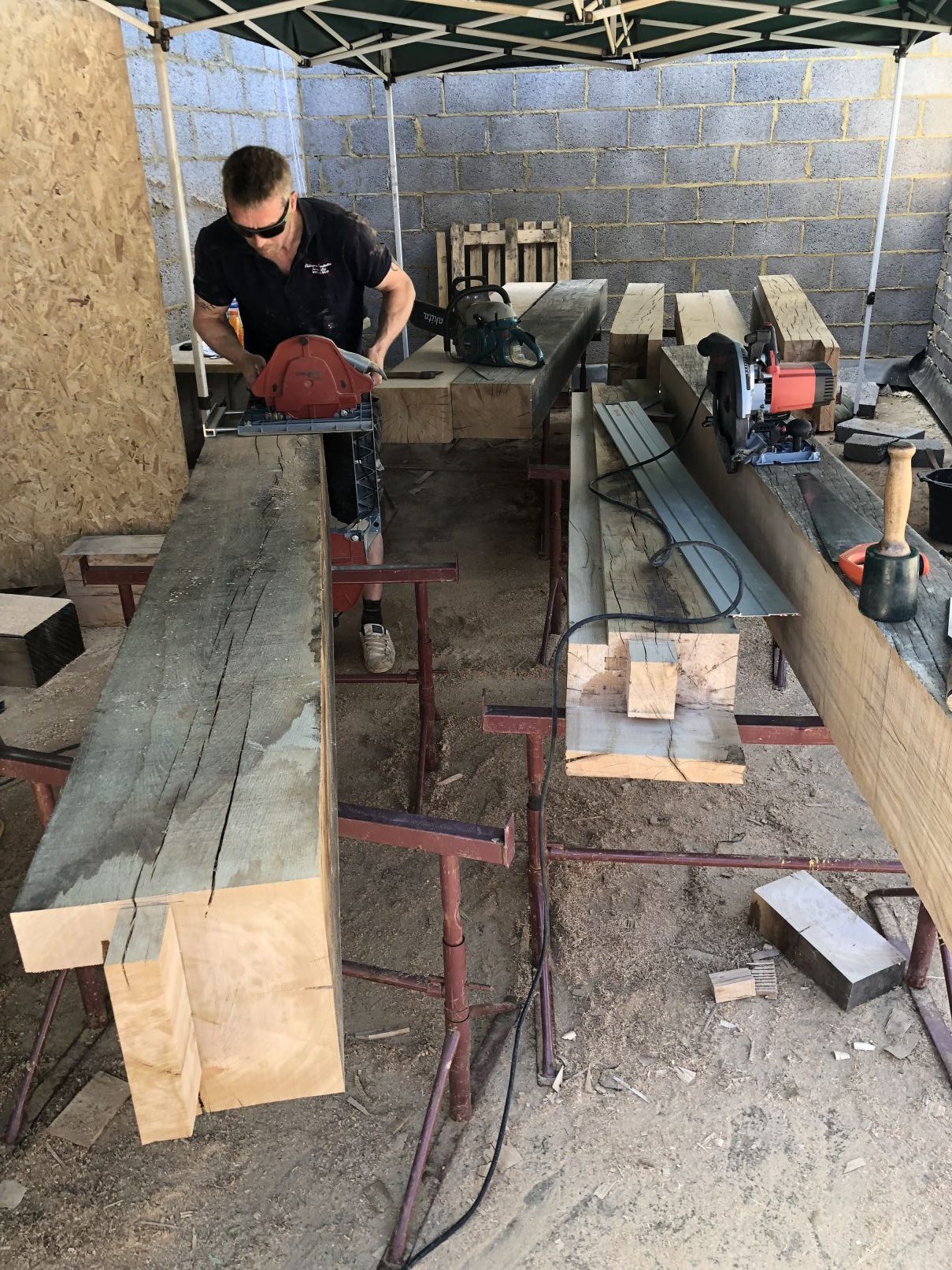
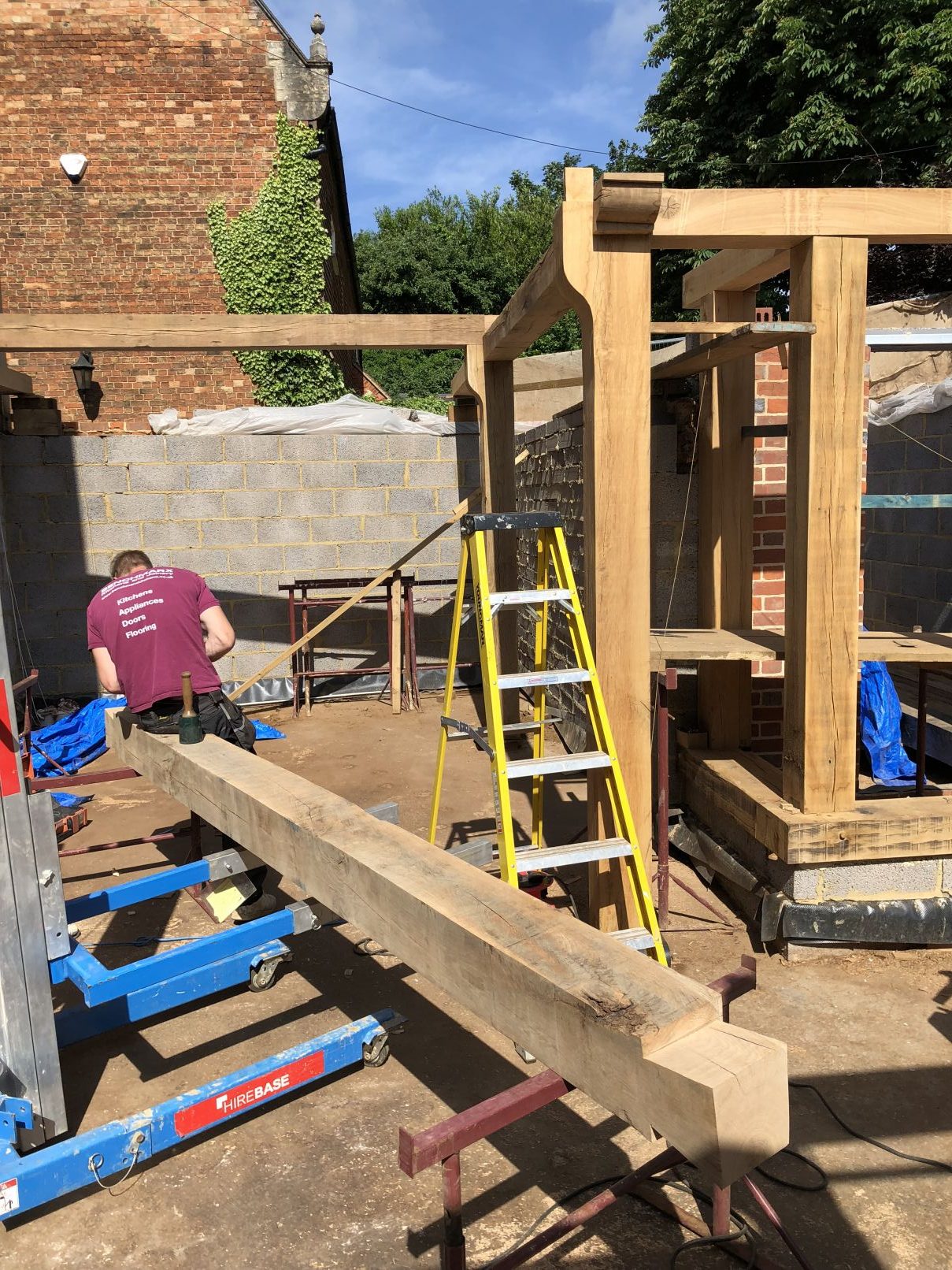
Our Oak Timber services range from complete extensions and Oak Frame replacements to minor repairs and splices using traditional techniques and joints.
Where possible, although harder to work with, we always aim to source air European Dried Oak dried beams to reduce shrinkage which are substantially sourced.
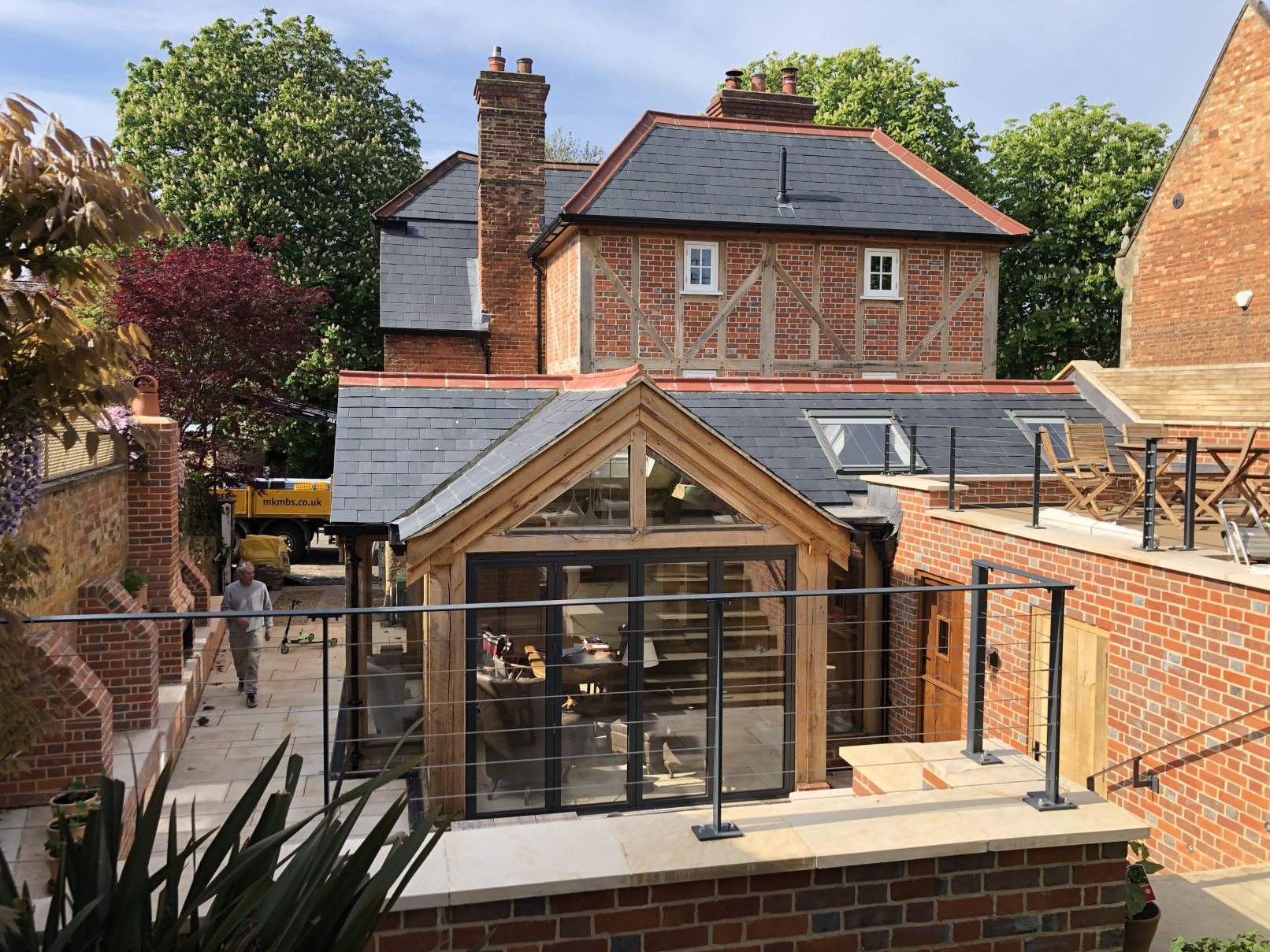
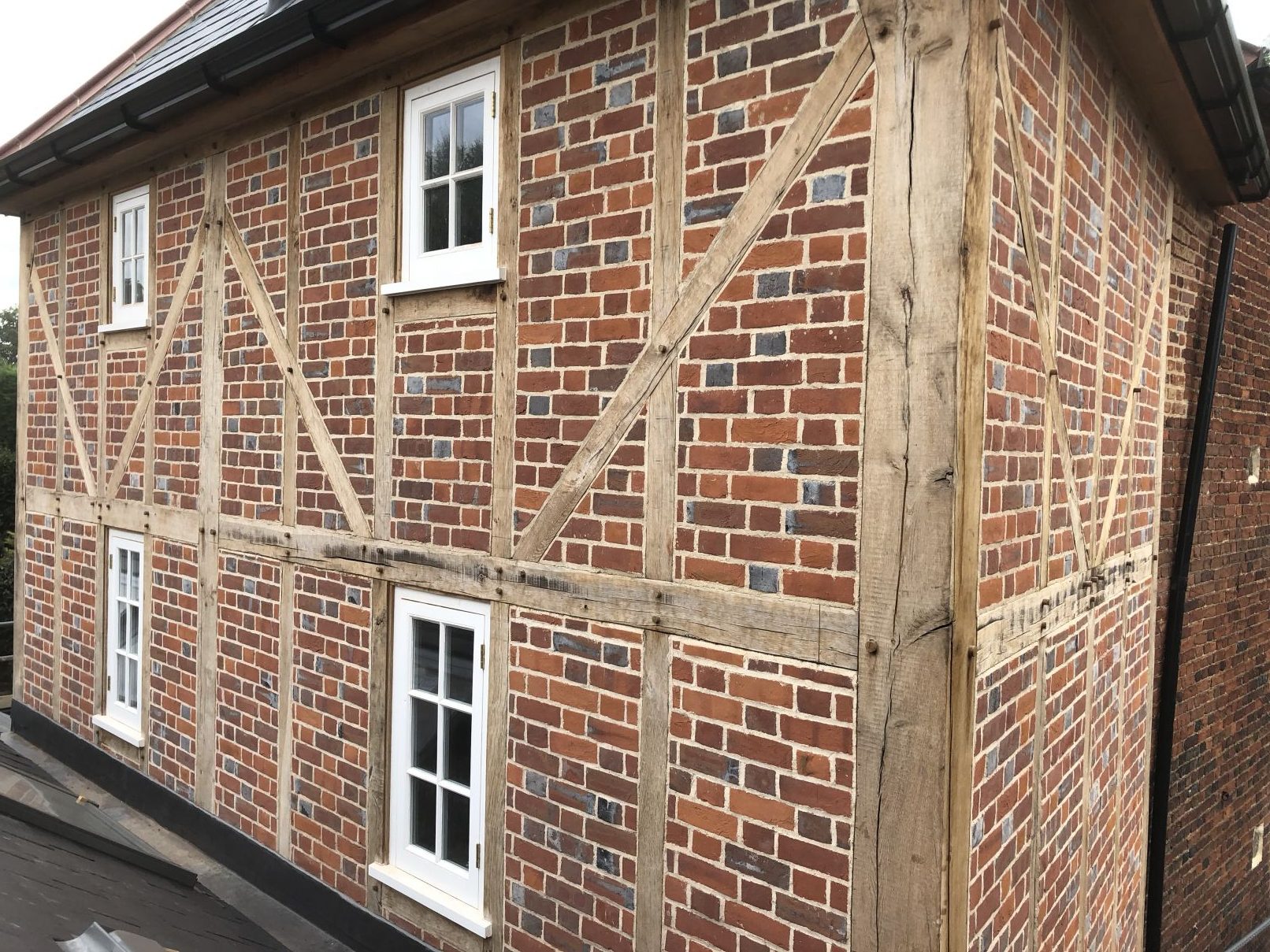
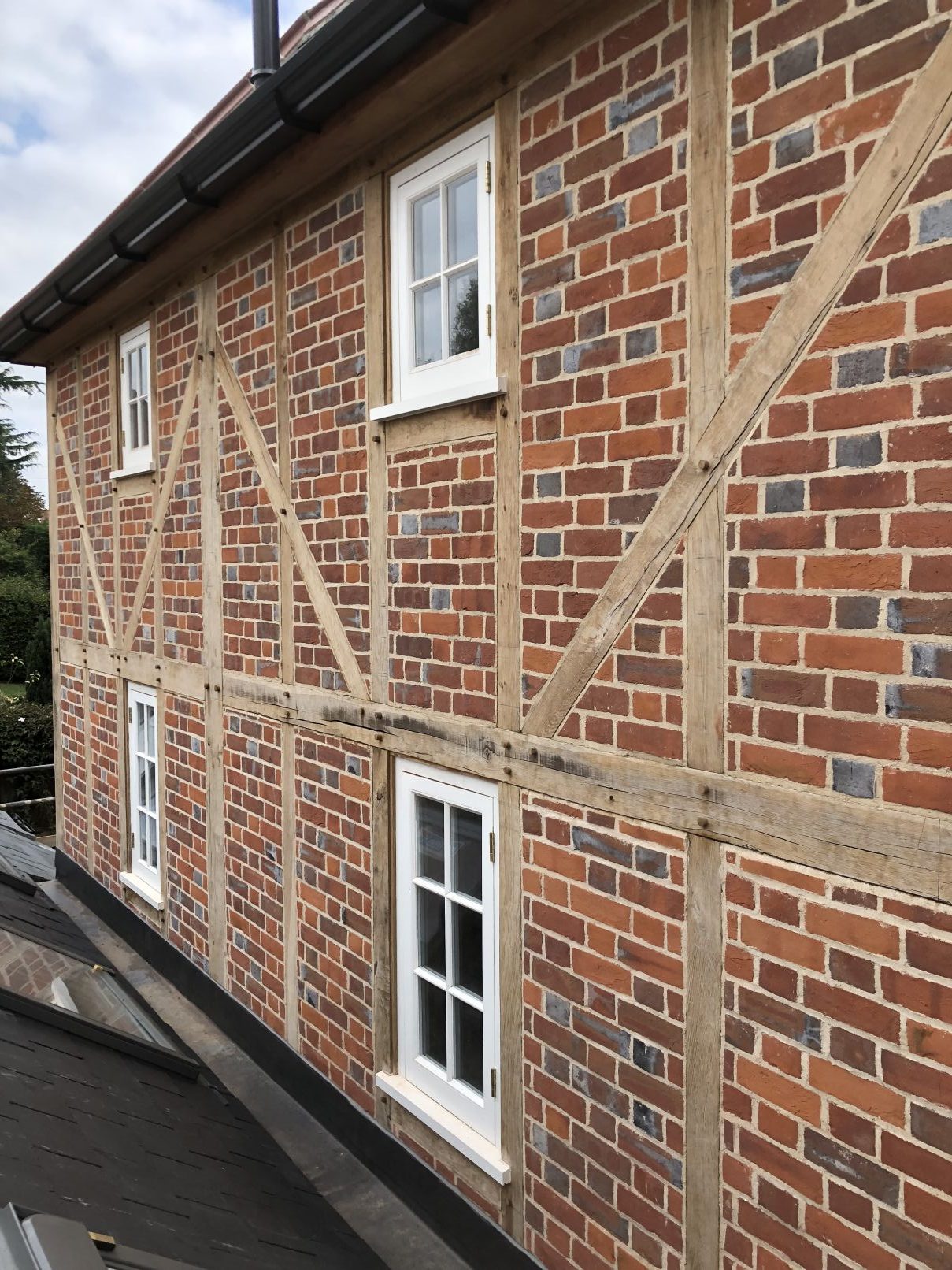
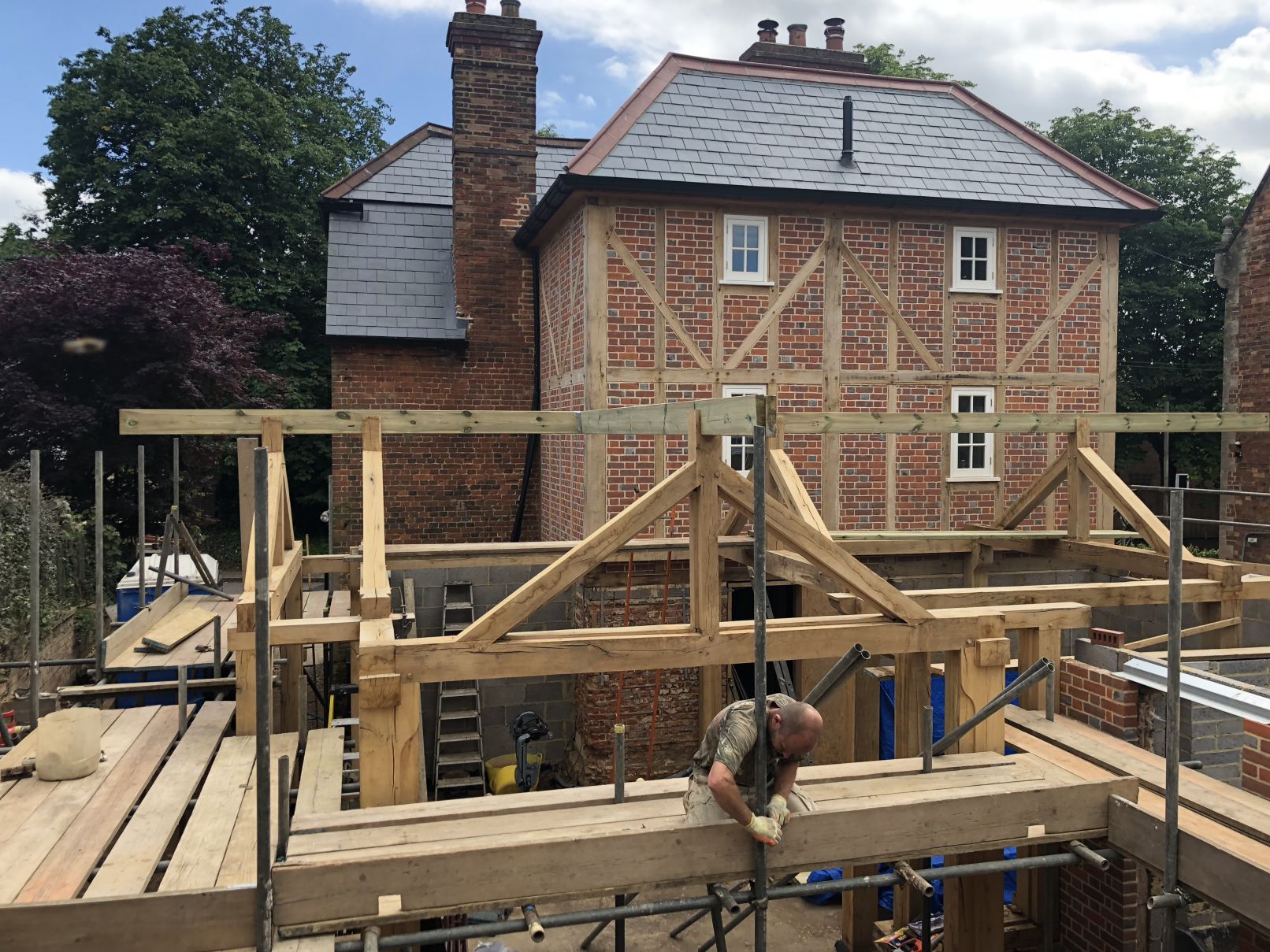
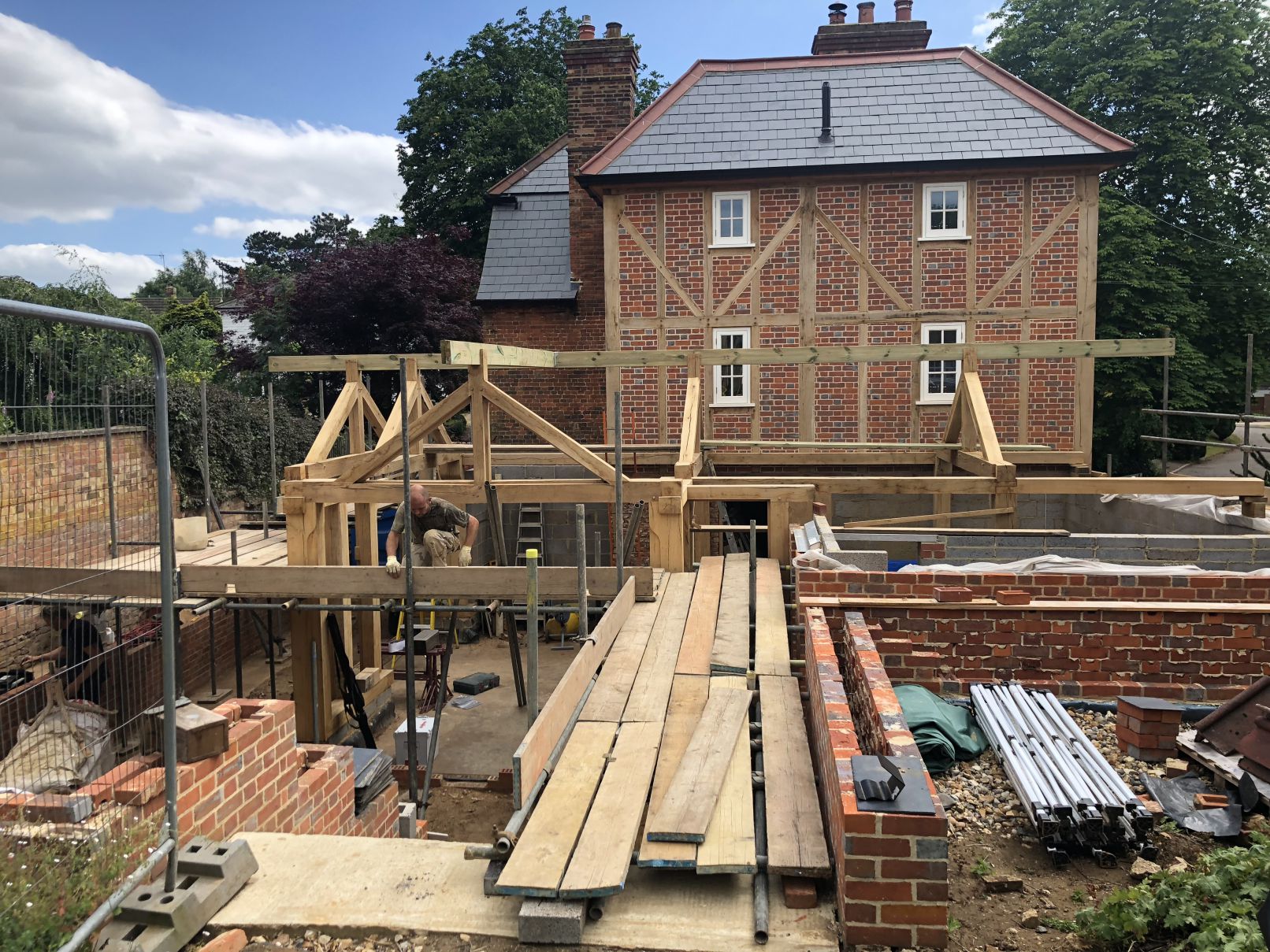
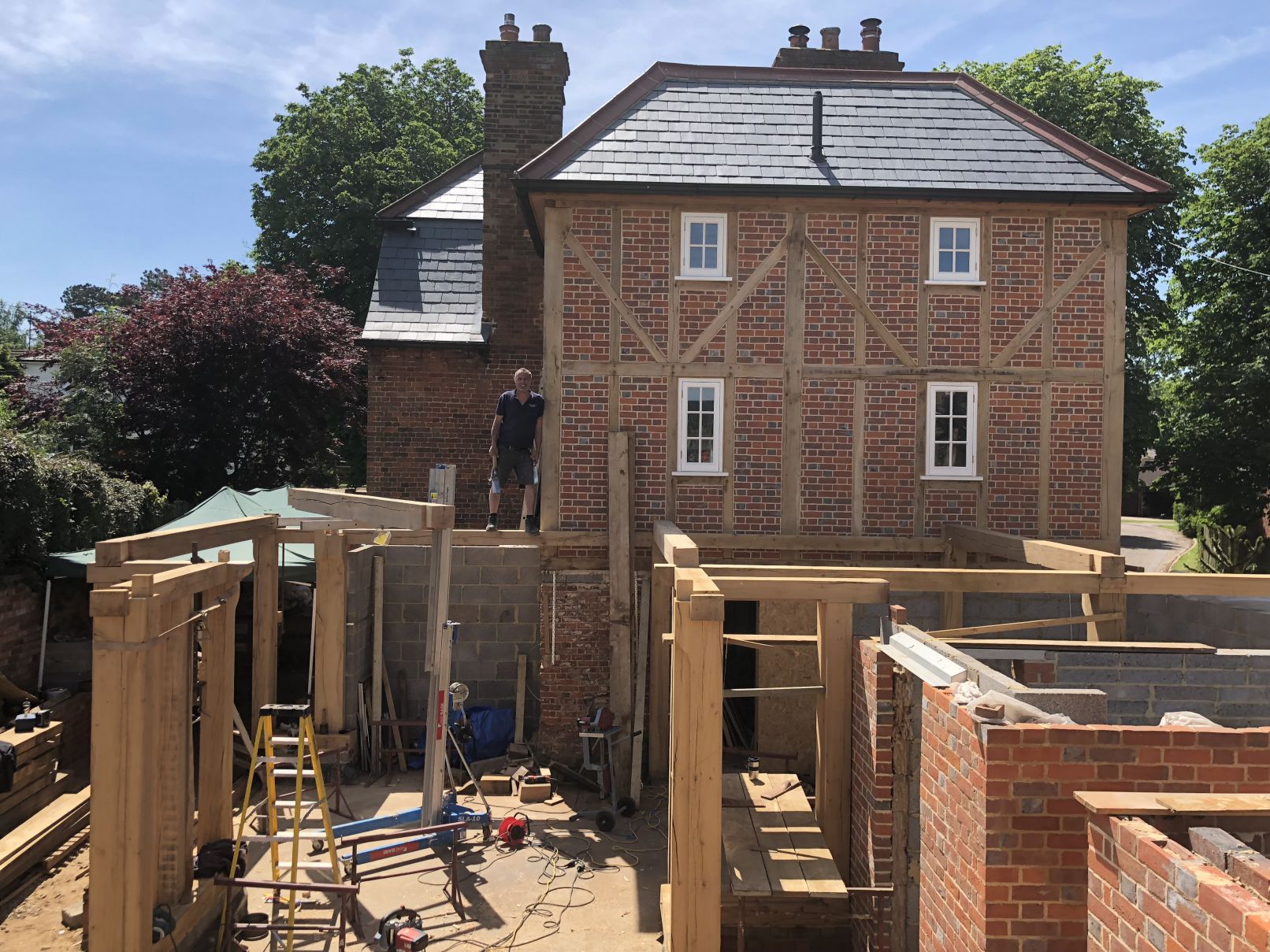
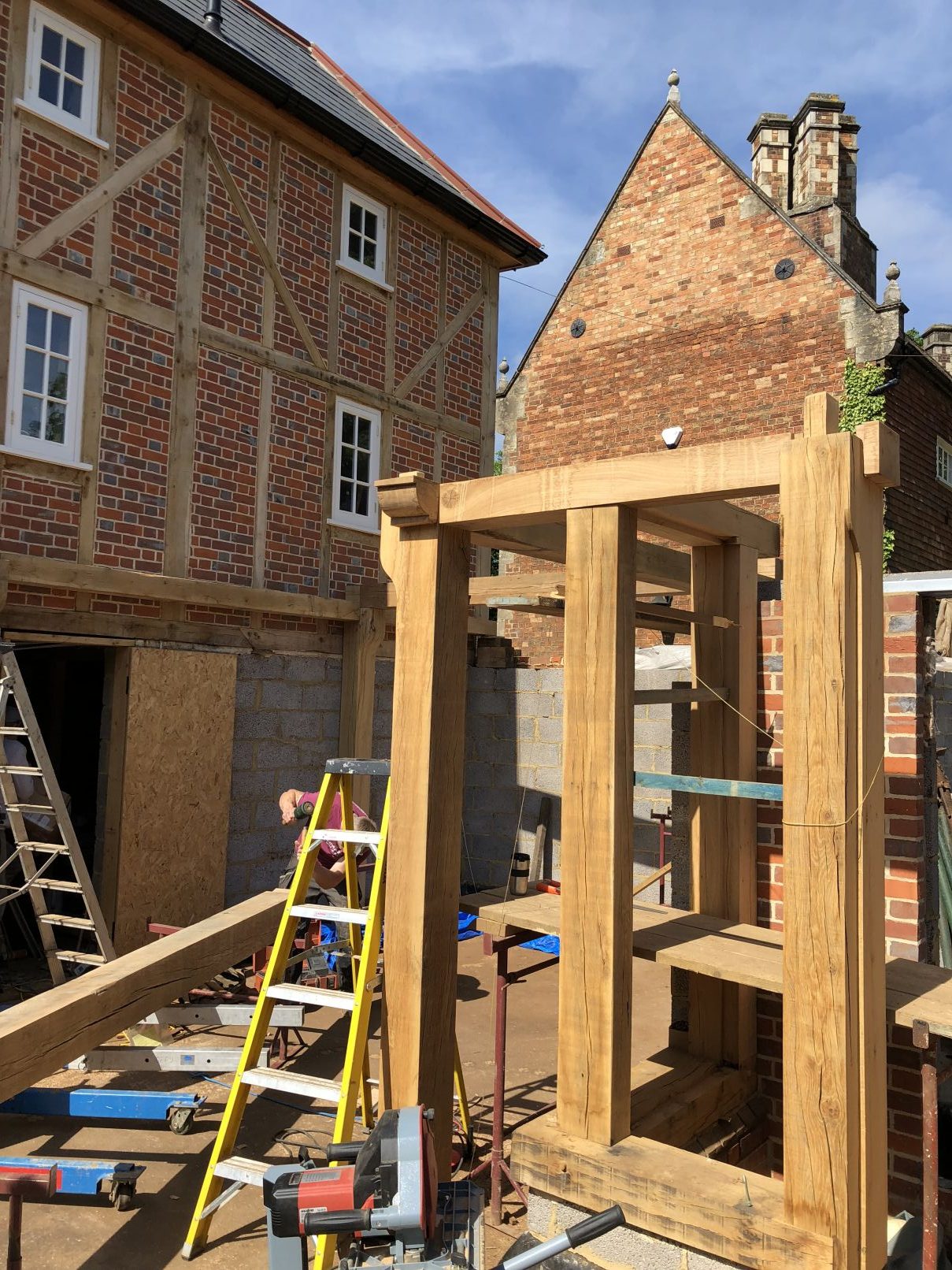
Timber frame wall construction
There are a few different types of wall construction within timber frame buildings the earliest being wattle and daub and very few now remain as over time these were replaced generally with brick.
Below are some examples as well as an in-depth look at wattle and daub which is one of the traditional services we carry out as well as all the other methods
Using lime mortars and plasters on old buildings—especially oak timber-framed ones—isn’t just about tradition, it’s about how the materials physically behave together over time.
Breathability (moisture control)
Lime is highly permeable, meaning it allows moisture to evaporate. Old buildings don’t have modern damp-proofing, so moisture inevitably gets into walls. Lime lets that moisture escape rather than trapping it.
With oak frames, this is critical—if moisture gets trapped against the timber, it accelerates rot and fungal decay.
Flexibility and movement
Timber frames naturally expand and contract with humidity and temperature. Lime mortars and plasters are slightly flexible and can accommodate this movement without cracking.
Modern cement-based materials are rigid. When used with timber frames, they tend to crack or pull away, letting water in and causing damage.
Softness (sacrificial protection)
Lime is softer than the surrounding materials (like brick, stone, or timber infill panels). That means it acts as a “sacrificial” layer—taking the wear and weathering instead of the structure itself.
If repairs are needed, it’s the lime that fails first, not the historic fabric.
Compatibility with historic materials
Old bricks, stones, and especially oak were originally paired with lime-based materials. They share similar thermal and moisture characteristics.
Using modern cement can create mismatches—cement is harder, less porous, and can force moisture into adjacent materials instead of letting it evaporate.
Reduced risk of decay in oak frames
Oak is durable, but it still suffers if kept damp. Lime’s alkalinity also discourages some biological growth (like mold), adding a small protective benefit.
Repairability and reversibility
Lime mortars are easier to remove and repair without damaging surrounding materials. That’s important in conservation work, where preserving original fabric is a priority.
👍 In Short
Lime works with the natural movement and moisture cycles of an old oak-framed building, while modern cement-based materials tend to fight against them—often causing long-term damage.
In traditional oak timber-framed buildings, the spaces between the structural timbers (called infill panels) and the ceilings were filled with materials that worked in harmony with the frame—flexible, breathable, and relatively lightweight. There’s quite a bit of regional variation across England and beyond, but the core systems are fairly consistent.
🧱 Traditional infill wall panels
Wattle and daub
This is probably the most iconic system.
- Structure: A woven lattice (wattle) of thin लक (hazel, willow, or similar) fixed between the oak frame.
- Infill: Daub—a mix of clay, sand, straw, dung, and sometimes lime.
- Finish: Usually coated with lime plaster and limewash.
Why it works:
- Very flexible → ideal for moving oak frames
- Highly breathable → prevents trapped moisture
- Lightweight → doesn’t stress the frame
Lath and plaster (panel infill)
A refinement of wattle and daub.
- Structure: Thin timber laths nailed across the panel
- Infill: Lime plaster pushed through gaps to form a “key”
- Often used more in later periods or higher-status buildings
Characteristics:
- Smoother, more uniform finish
- Still breathable and flexible
- Less rustic than wattle and daub
Brick nogging (brick infill)
Common from the late medieval into post-medieval periods.
- Structure: Bricks laid between the oak frame
- Mortar: Lime mortar (crucial—cement causes problems)
Variations:
- Herringbone brickwork (decorative)
- Simple stretcher bond
Key point:
Bricks were often softer and more porous than modern ones, making them compatible with lime and timber.
Stone infill
Used in regions where stone was readily available (e.g. Cotswolds).
- Rough rubble stone set in lime mortar
- Sometimes rendered over with lime plaster
Traits:
- Heavier than other infills
- Still breathable if lime is used
- Needs careful detailing to avoid stressing the frame
Cob or mud infill
Similar in composition to daub but more solid and referred to as Wichert
- Clay-rich earth mixed with straw
- Packed into panels rather than woven
Less common in timber framing panels but appears in some regional traditions.
Plank infill (less common)
- Vertical or horizontal timber boards
- Sometimes used in barns or simpler buildings
🏠 Ceiling and internal infill systems
Lath and plaster ceilings
The standard historic ceiling method.
- Timber laths fixed to joists
- Lime plaster applied in coats (scratch, float, finish)
Benefits:
- Lightweight
- Flexible (moves with structure)
- Good acoustic and fire properties
Exposed frame with infill above
In many houses:
- Ceiling = exposed oak beams
- Floor above filled with:
- Clay mixtures
- Ash
- Straw
This added:
- Sound insulation
- Fire resistance
Boarded ceilings
- Timber boards fixed to joists
- Sometimes left exposed or later covered with plaster
Seen in more modest interiors or service spaces.
Reed or split lath ceilings
Instead of sawn laths:
- Reeds, riven timber, or split sticks used as a base
- Plastered over with lime
Common in earlier or more vernacular buildings.
⚖️ Why all these systems worked
Across all these types, the key shared qualities are:
- Breathability → allows moisture to escape
- Flexibility → accommodates movement of the oak frame
- Low stiffness → avoids stressing joints
- Repairability → easy to patch and maintain
That’s why replacing them with rigid, impermeable modern materials (like cement render or gypsum in the wrong context) often leads to cracking, trapped moisture, and timber decay.